

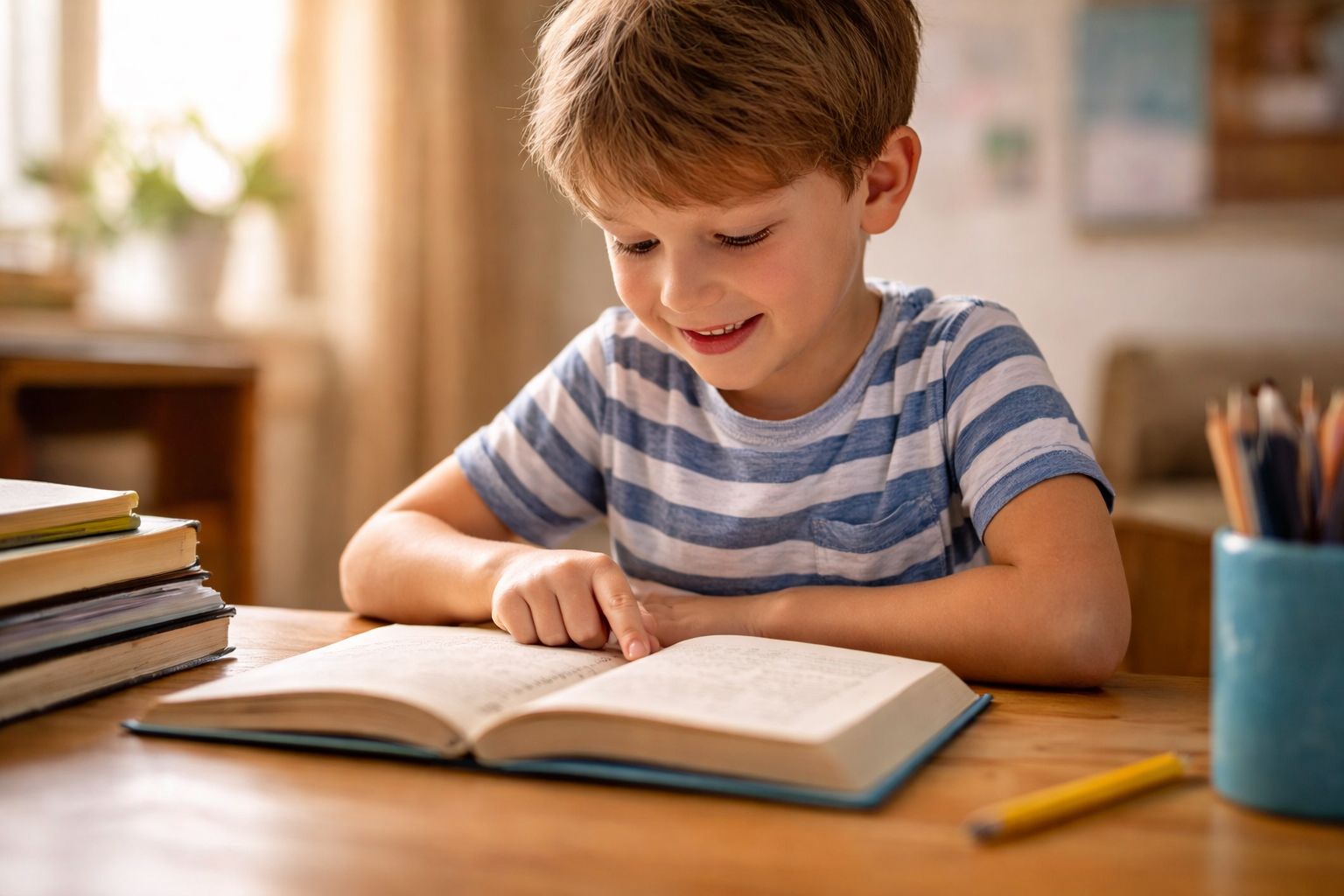
Learning to read is one of the most important transitions in a child’s life. It is not simply the learning of letters and words. It is the moment a child discovers that marks on a page can carry meaning, stories, knowledge, and imagination.
When understood properly, learning to read is not difficult. But it does follow a natural process. When adults understand this process, they can help children develop confidence, enjoyment, and lasting success.
Reading begins with emotional safety
Before a child can learn to read, they must feel safe.
A child who feels calm, supported, and unhurried can focus their attention on discovering how words work. A child who feels pressure, embarrassment, or fear of making mistakes will often withdraw.
The emotional environment matters as much as the words themselves.
When reading is associated with warmth, attention, and shared experience, the child’s brain becomes receptive. Reading becomes something they want to do, not something they are forced to do.
This early emotional foundation shapes their attitude to reading for life.
Reading grows from spoken language
Children do not learn to read by starting with symbols. They learn to read by connecting written words to spoken words they already know.
This process begins long before the child sees their first printed page.
They first hear language.
They then begin to understand it.
They begin to speak.
Only then can written words attach to meaning.
The richer a child’s exposure to spoken language, conversation, and storytelling, the easier reading becomes.
Reading builds on language. It does not replace it.
The brain learns through sound before it learns through letters
One of the most important foundations of reading is the ability to hear the individual sounds within words.
For example, hearing that the word “cat” contains three sounds: c – a – t.
This ability develops naturally through listening, speaking, rhyming, and storytelling. When children become familiar with the sounds of language, written letters become easier to understand, because the letters simply represent sounds they already recognize.
This is why hearing words spoken clearly and repeatedly is so valuable.
Repetition builds confidence and understanding
Children benefit greatly from hearing the same story more than once.
While adults often seek novelty, children seek mastery.
With repetition, the child begins to anticipate what comes next. They recognize words. They connect sounds, meanings, and symbols. What was once unfamiliar becomes familiar.
Each repetition strengthens the neural pathways involved in reading.
This process builds confidence, which accelerates learning.
Pictures help children connect words with meaning
Images play an important role in early reading.
Pictures provide context. They help the child understand the meaning of words, even before they can fully decode the text.
The child uses pictures, memory, and sound together to build understanding.
Over time, as reading ability grows, the child relies less on pictures and more on the words themselves.
This gradual transition allows reading to develop naturally and without frustration.
Success builds momentum
Children learn best when they experience success.
When reading material is appropriate to their level, children feel capable. This sense of capability encourages them to continue.
When material is too difficult, children may feel discouraged. When it is appropriate, they feel proud.
Confidence is one of the strongest drivers of learning.
Small successes, repeated regularly, create steady progress.
Attention develops over time
Young children have naturally short attention spans. This is normal.
Short, regular reading sessions are far more effective than occasional long ones.
Even a few minutes of focused, positive reading each day can have a powerful cumulative effect.
Consistency matters more than duration.
Reading is about understanding, not just pronouncing words
True reading is not simply saying words aloud. It is understanding their meaning.
A child who understands what they are reading develops deeper comprehension and greater enjoyment.
When a child becomes curious about what happens next, reading becomes an active process. They are no longer simply decoding words. They are engaging with ideas.
This engagement strengthens both reading ability and thinking ability.
Every child develops at their own pace
Children learn to read at different ages and at different speeds.
Some begin early. Others take more time.
This variation is normal.
What matters most is not how early reading begins, but whether the child develops confidence, enjoyment, and a sense of capability.
With the right environment, patience, and support, every child can learn to read successfully.
Reading emerges naturally when the environment is right
Reading is not forced into a child. It grows within them.
It grows from exposure to language, from shared stories, from repetition, from encouragement, and from emotional safety.
When adults understand this, they can create the conditions in which reading develops naturally.
In these conditions, reading becomes not a task, but a discovery.
And that discovery stays with the child for life.